
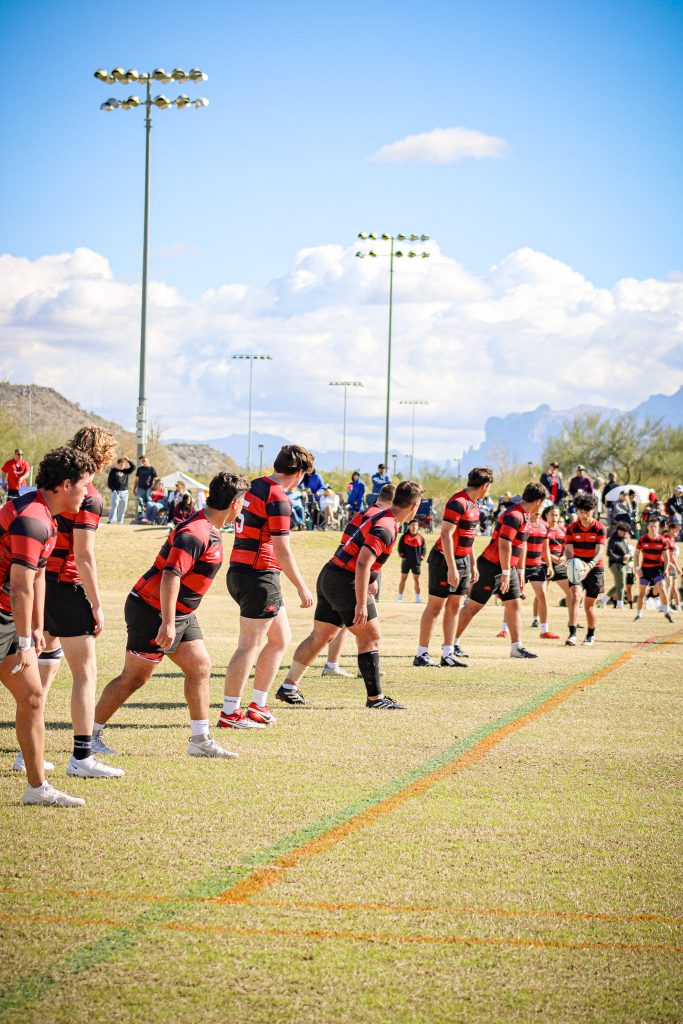
Red Mountain Youth Rugby has won the State High School Division 1 (top division) championship 7 times. As well we won the Div 2 HS championship 4 years ago when we entered a High School JV team and we have won the U16 State Championship 4 times making us the most successful youth rugby team in Arizona. Our U14 boys made the 2016, 2017 and 2019 U14 semi finals, U12 made the 2020 Final and our U10 boys won their division in 2016 and 2017. We are also one of only two Arizona club teams invited to play at national tournaments. We have a tradition of excellence and success that we want to uphold and have successive players enjoy the thrill of winning championships.
Rugby is a young sport in the USA and still in its infancy at the High School (and younger) level here in AZ. The US is a 2nd tier rugby nation and, whilst the sport is enjoying steady growth in adult player numbers and some growth in youth numbers in recent years, this has yet to translate into where USA Rugby ranks internationally. For example 10 years ago in 2006 USA was ranked 14th and we have fallen to 15th in 2019. By way of comparison, Japan was 18th in 2006 and now is ranked 11th.
How is this relevant to RMYR? It is relevant because as coaches we are trying to build excellent players off a very inexperienced base. Most freshman age players in New Zealand (where most of the coaches are from) would have had at least 5 years (or more) experience playing rugby. This season, whilst almost all our freshman players have had prior experience, it was only for a year or two of prior experience. Of our seniors, only a few of the most experienced players have had only 5 prior years experience. In NZ, senior aged players would have 10 years + experience. We have a number of Junior and Senior age players who start playing rugby near the end of their time in high school and we are the most experienced team in AZ. Coaching inexperienced players is the greatest challenge faced by all youth and High School age rugby coaches in the US.
For several reasons, we have chosen not to follow the pattern used by high school football coaches with 5 even 6 days of practices that are often 3 hours long. We don’t own our players like HS football coaches seem to want to and we try to treat our players with more respect and empower them more. At least 50% of our HS and U16 players also play football and a good number are starting Varsity players for top schools. They all love their football but we’ve not met a player yet who plays football and rugby who doesn’t prefer rugby. It’s because rugby is player managed not coach managed. We teach skills and plays but the boys decide in real time what game strategies to deploy on the field during a game. Most players are on the field for the whole game and everyone gets to touch the ball and so potentially can score. The aerobic intensity also results in a bigger post-game adrenaline rush versus football. But not ‘owning’ players has a downside and that is when it comes time for practices.
We only practice 2 days a week for 2 hours. It is precious time for us coaches. With such a widespread experience and skills (and often fitness) deficit because of the newness of the game here, we are in a race against time to build skills and fitness. Our players and parents fall into various categories of commitment to the game. The percentage of our players who commit to the game and our practices with the rigor and intensity required by most HS football programs is quite small. These are boys for whom rugby has become their passion and it ranks higher than almost all other activities. These boys are always at practice and always on time for games and give us 110% every time they are with us. Usually their parents are just as committed. A few parents played rugby in college or are expats from rugby playing countries so their son has grown up with the rugby culture.
For the majority of our players, rugby is something they enjoy and are quite committed to but the game has not been absorbed into their (or their family’s) culture with the intensity that occurs with high school football programs (or other interscholastic high school sports for that matter). Rugby is cool and fun but there always seems to be a range of things that come first causing players to not be at practice and sometimes not at games. When we are scrambling hard to up-skill players who are almost universally inexperienced by world standards, the lack of priority that rugby is afforded by them and their families becomes a source of great frustration for us coaches. We are fortunate to have larger than average squads but every year, our competitiveness compared to the best out-of-state teams, is eroded by our inability to have all our squad at practices and games reliably. Except for a tiny handful of freakishly talented athletes who pick anything up quickly and who are well above average in strength, speed, dexterity and fitness, the only way to get better at rugby is to come to every practice and be available for every game. We have a small percentage of players who treat rugby almost as experiment that they are toying with and weighing up alongside other sports. These few are very irregular and sporadic in their attendance.
Our plea is this. Please make rugby a priority. Players; make the case to your parents. Please schedule your lives so that your studies are kept up so that parents don’t have to keep you home to study. We know there is a lot happening in your lives and in your families’ lives but players and parents, when contemplating not coming/not sending your son to rugby training or a game, ask yourself this question: if I/my son was a starting Varsity football player for say Mountain View, Gilbert or Highland, would I be staying away/letting them stay away? Parents: We don’t want to ‘own’ your sons like football coaches do but we’d like rugby to have an elevated priority status in the family’s hierarchy of competing activities. Players: we can’t make you into national champions if choir or homework or a job or other things keep you from learning the skills that we are anxious to teach you. If you get frustrated at not starting then perhaps examine your attendance record at training and games. The more you come, the better you will get.
A decision as to what team a player will play on is made by the coaches based on factors such as how quickly they pick up the game, ball handling skills, fitness, size, speed, attitude, teachability and attendance. Like any sport, the decision as to who is allocated to which team and who starts for each team is at the sole discretion of the Head Coach OJ Hawea.